
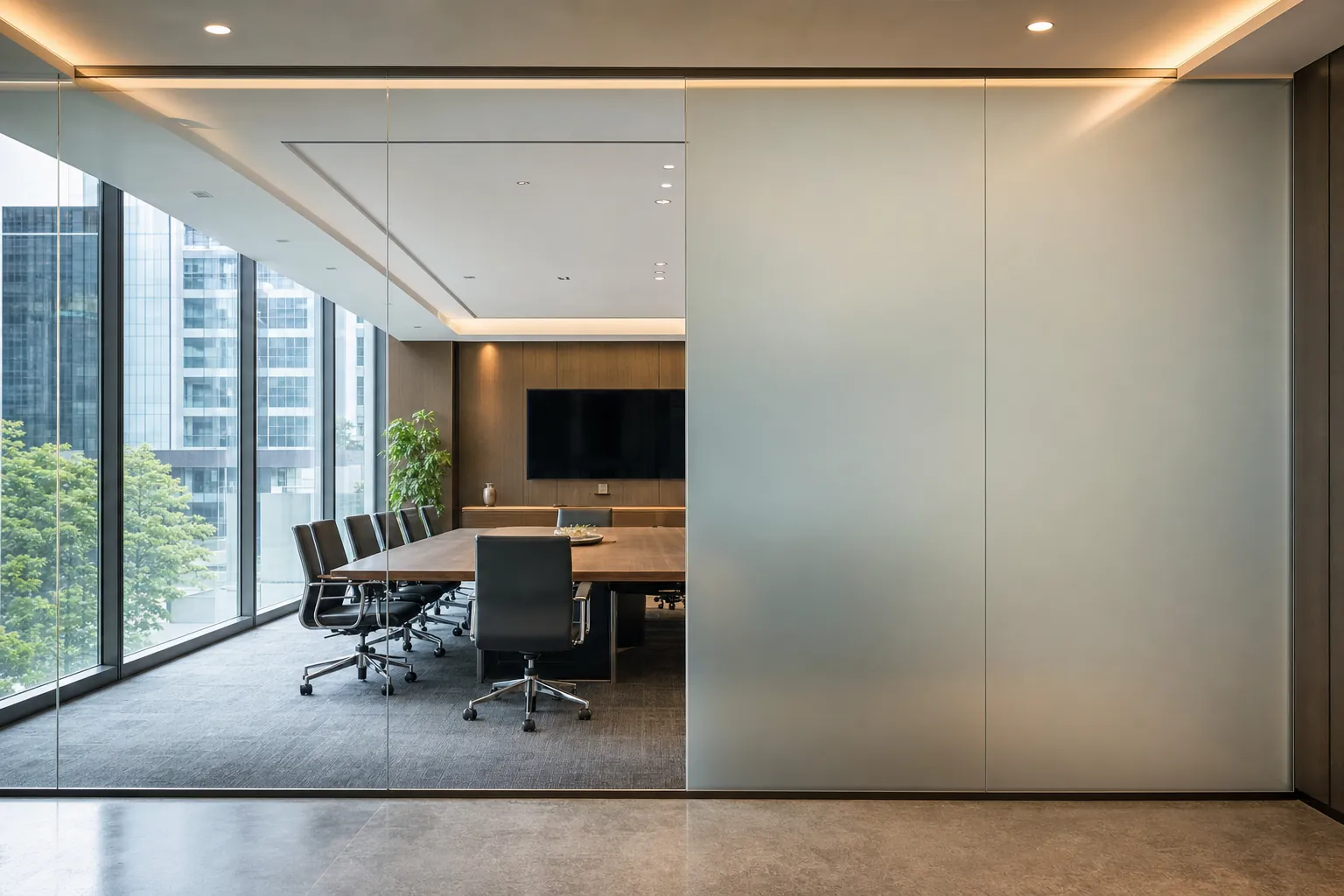
Solar control window film is easy to oversimplify. A customer may ask for a cooler room, less screen glare, a clearer view, or a more private glass line. Those are related goals, but they are not the same specification. A professional recommendation starts with the glass already in the building, the way the sun reaches it, and the performance numbers that answer the customer’s actual problem.
Start With the Job, Not the Darkest Sample
Solar control film is selected to manage the solar energy and visible light that pass through existing glazing. In a west-facing conference room, the main complaint may be afternoon heat. In a retail space, it may be glare on displays. In an office, the buyer may want daylight without a distracting mirror effect. The first useful question is what the space needs to feel and look like after the work is complete.
That keeps the conversation away from a familiar mistake: treating a darker-looking sample as proof of better heat control. Darkness describes appearance. It does not, by itself, tell an installer how a given film will perform on a particular pane of glass. The National Fenestration Rating Council consumer guide explains that window films can reduce solar heat gain through reflection and absorption, while visible transmittance describes how much light passes through. Those measurements belong together, but they are not interchangeable.
Begin by recording the room use, the glass orientation, when the discomfort occurs, whether daytime privacy matters, and how much change in exterior appearance the customer will accept. Then use a sample on the actual glass whenever possible. A sample under fluorescent shop lighting is not the same thing as a large pane facing afternoon sun.

Read the Measurements as a Set
A film data sheet can feel technical, but it gives an installer the language needed to make a clear, credible recommendation. For architectural work, focus first on the measurements that answer the stated objective. If the concern is heat, compare solar heat gain and related solar-control values. If the concern is a bright, washed-out room, compare visible light and glare characteristics. If furnishings are part of the concern, discuss UV reduction as one part of the project rather than treating it as a stand-alone cure for fading.
Solar Heat Gain Coefficient, often shown as SHGC, is one useful whole-window measure when available. The NFRC guide notes that a lower SHGC means less solar heat is transmitted. Visible transmittance, often abbreviated VT, describes how much visible daylight passes through, so a higher number means more visible light. Those terms help establish the tradeoff a project is making: daylight, heat management, reflection, and appearance need to work together.
Do not compare one brand’s headline percentage with another brand’s different test or measurement. Compare like with like, at similar visible-light levels, on the intended glass. Ask for the exact film data, not a category label. That discipline also makes it easier to explain why two films that look nearly identical on a sample board may be quoted differently.
Confirm the Glass Before You Promise Performance
The glass is part of the system. Its type, tint, thickness, coatings, pane construction, and condition influence whether a film is appropriate. So do the orientation of the glass, local climate, altitude, uneven shading, and interior treatments that hold heat near the pane. The International Window Film Association’s flat-glass solar guide lists those factors and advises installers to use the manufacturer’s film-to-glass guidance for the exact installation.
That is not paperwork for its own sake. Solar-control film can absorb part of the energy it does not reflect or transmit. That can raise the temperature of the glass. On an incompatible pane, a poorly matched film can add thermal stress or create a warranty issue. The right outcome is not to avoid architectural film. It is to identify the glazing before the sales conversation turns into a promise.
For a commercial assessment, obtain what the building owner or glazing contractor can provide about the unit. Look for glass markings, construction documents, the number of panes, coatings, tint, and any known history of cracked panes or seal issues. Measure pane size and note exterior and interior shading. If the glass cannot be identified confidently, pause the recommendation until the film manufacturer or technical team can review it.

Match Film Construction to the Project
Solar-control films can lean more reflective, more neutral, or more spectrally selective in appearance and performance. A reflective option can be useful when a project needs strong glare and solar control and its exterior look supports that choice. A neutral or lower-reflectivity option may be the better fit where the design team wants a more subtle result. The answer is not universal, because the building, view, and glass all matter.
Keep the discussion focused on what visitors and occupants will actually notice. Does the customer need a softer glare condition on screens? Is the goal to preserve a storefront view? Will the exterior reflection look acceptable during the day? Does the project need a neutral interior appearance? What happens after dark when interior light is stronger than outside? These questions prevent a film choice from being reduced to one statistic or a quick visual guess.
Solar Tint Wholesale’s architectural window film path is organized around solar control, glare, comfort, and privacy-led glazing conversations. Qualified dealers can use it to discuss dual-reflective, spectrally selective, and neutral carbon options as project tools, not interchangeable products. When a customer asks for a highly technical finish such as sputtered film, the sputtered window film guide offers a closer look at how construction, appearance, and glass assessment connect.
Set Expectations About Comfort and Appearance
A good solar-control recommendation describes the likely change without promising that film will solve every temperature problem in a building. Film can help reduce solar load and glare on the glass it covers. It does not replace an undersized air-conditioning system, repair failed seals, or turn a poorly insulated assembly into a new window. The U.S. General Services Administration describes solar-control films as products that reflect or absorb solar energy before it reaches interior spaces, reducing cooling demand in the right context.
Be equally precise about privacy. A reflective film can change the daytime view from outside, but it is not a guarantee of privacy after dark when the interior is brighter. Be direct about that boundary before installation. The result is a better customer experience and fewer after-the-fact conversations about an effect the project was never designed to create.
After a selection is approved, document the film, shade or finish, glass information, and the agreed visual objective. That gives the sales team, installer, and customer one shared record. It also makes future additions to the building easier to assess, because the next project starts with real information rather than a guess about what was applied years ago.

Use a Pre-Quote Checklist
A short, consistent checklist protects both the installer and the customer. Before a price is presented, capture the room use and the time of day the problem is most noticeable. Record which elevations receive direct sun, whether nearby buildings or trees create moving shade, and whether blinds, furniture, screens, or merchandise change the priority. A film recommendation is stronger when it responds to a defined problem instead of a vague request for a darker window.
Next, identify the glazing as far as the project allows. Note single, double, or triple pane construction, any visible tint or coating, pane dimensions, framed or frameless edges, existing film, and defects such as chips, cracks, or seal problems. Do not treat an unavailable glass detail as a minor omission. It is the moment to seek the manufacturer’s compatibility direction, especially on a large, coated, laminated, or unusually exposed pane.
Finally, show the customer what they are approving. View the sample from inside and outside at the times the space is used when that is practical. Discuss daytime and nighttime appearance separately. Explain the expected care and curing guidance for the exact film. A written scope should identify the approved product, the glass areas, the expected visual result, and the limitations already discussed. This makes the handoff clearer for the installer who arrives on site and more reassuring for the person who signed off on the work.
The checklist also improves estimating. A team that knows the pane count, access conditions, film width, edge detail, and compatibility approval can price the real job instead of discovering essential work after the quote is accepted. That protects margin without making the proposal feel defensive. Customers respond well when an installer can explain that careful assessment is how the finished installation stays both attractive and appropriate for the glass.
Build a Repeatable Architectural Film Process
For installers expanding into flat glass, the most valuable habit is a repeatable assessment process. Start with the room problem. Identify the glazing. Confirm film-to-glass compatibility. Compare data at the intended appearance. Show a sample. Document the selection. Then complete the installation with the same care given to every visible edge and glass surface.
Solar Tint Wholesale supports qualified professionals with training and support resources, a broader applications overview, and product conversations that separate architectural solar control from automotive tint and glass-protection work. For teams ready to add a dedicated architectural film offering, apply for dealer access and build the range around the projects your market is already asking for.
Frequently Asked Questions
What is solar control window film?
Solar control window film is an architectural film selected to manage solar heat and glare passing through glass. Depending on the film and glazing, it may reflect and absorb part of the sun’s energy while still allowing useful daylight into the space. The exact result depends on the film, the glass, and the installation conditions.
Does solar control window film make a room dark?
Not necessarily. Visible transmittance and solar heat gain are separate measures. A film can be selected for stronger heat and glare control, more daylight, more exterior reflectivity, or a balance of those outcomes. Compare the actual performance data and a real sample before promising a visual result.
Can solar control film be installed on double-pane windows?
Some double-pane units can accept compatible film, but that decision cannot be made from the words double-pane alone. The installer should identify the glass construction, coatings, tint, thickness, orientation, and film recommendation, then follow the manufacturer’s film-to-glass guidance and warranty requirements.
Is solar control window film the same as insulation?
No. Solar-control film is primarily a solar-gain and glare-management tool. It can help reduce cooling demand in the right setting, but it is not a substitute for a window assembly designed for insulation. Discuss the project’s heat, daylight, appearance, and comfort goals separately.


