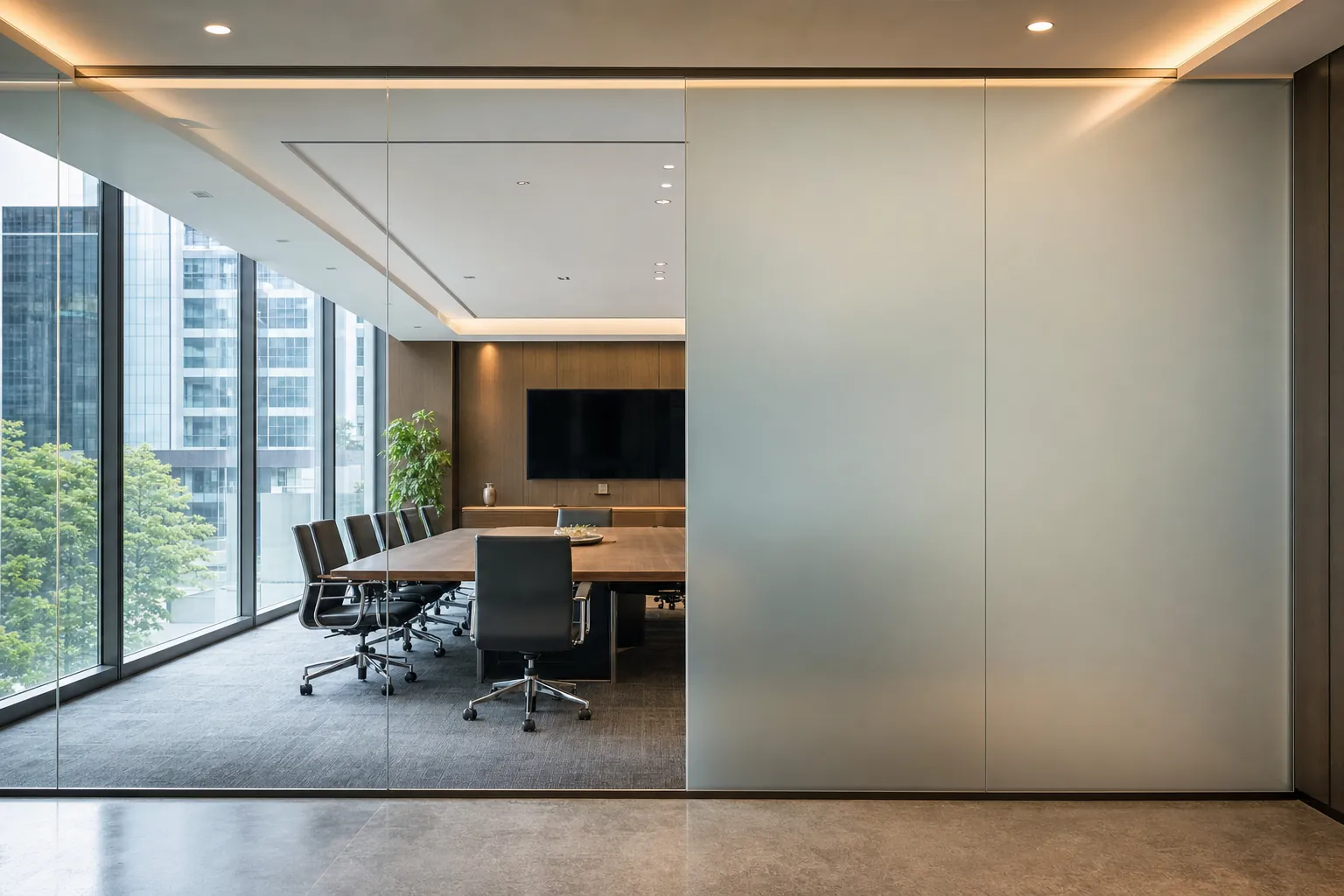
Office window film can solve a real comfort or privacy problem, but only when the recommendation starts with the room instead of a roll. A west-facing conference room, a bright customer-facing reception area, and a glass-walled meeting space may all be called “office windows,” yet each calls for a different conversation. The best installers separate heat, screen glare, daylight, privacy, appearance, and glass compatibility before they specify a film.
Start With the Office Problem, Not the Film Name
Ask where and when the problem occurs. Is a perimeter desk difficult to use after lunch? Do employees close the blinds to see a monitor? Is a conference room visually exposed to the hall? Does a reception area need a more finished, private feel while still looking open? A simple walk-through at the time the complaint occurs reveals much more than a request for “office tint.”
Daylight is valuable, but unmanaged daylight can create uncomfortable contrast. The U.S. Department of Energy notes that people using screens beside exterior windows can experience glare and contrast problems, and recommends considering desk orientation as an early, low-cost improvement. Its indoor-environment guide specifically advises placing desks perpendicular to glare sources where practical. Film can be part of the answer, but the assessment should account for the room layout, shades, lighting, and workstations too.
That perspective keeps an installer from offering one product for every pane. A solar-control film may fit exterior glazing where heat and direct glare are the issue. Frosted or patterned film can be better for an interior conference-room wall. A safety-focused film is a distinct decision again. Solar Tint Wholesale’s applications overview helps separate those jobs before a customer starts comparing samples.

Map the Glass Before You Quote
For exterior glass, start with orientation and exposure. East and west elevations often create low-angle light that moves through the room during the workday. South-facing glass can create a different, longer solar-load pattern. Record the affected rooms, the time of day, nearby overhangs, trees, buildings, blinds, and partial shading. A room that is comfortable in the morning may be the difficult one by 3 p.m.
Then identify the glazing. Look for glass markings, construction information, pane count, coatings, visible tint, pane size, existing film, and any known history of cracked glass or failed seals. The International Window Film Association explains that film-to-glass compatibility depends on factors including the film type, glass type and thickness, coatings, unit construction, orientation, climate, altitude, and uneven shading. Its architectural solar-control guide also stresses that manufacturer guidance for the specific glass and film is the deciding reference.
This is not a reason to avoid office film. It is how an installer avoids making a promise that the glass cannot support. Architectural glazing is a system. The film, glass, frame, exposure, interior conditions, and the customer’s expectation all meet in the same pane. If the glass cannot be identified confidently, pause the product recommendation and get compatibility review before the project is sold.
Choose for Heat and Glare Without Sacrificing the Whole Room
Heat and glare are related, but they are not the same thing. A film that changes visible light can help with screen comfort, while a film’s solar-control characteristics affect how it manages sun-driven heat through the glass. The finished choice also changes the exterior appearance, the interior reflection, and the amount of useful daylight. That is why a darker-looking swatch is not automatically the best heat-control option.
Compare product data at the same shade range and on the intended glass. Look at visible-light transmission, reflectance, solar-control information, warranty, and the manufacturer’s compatibility approval. The solar-control window film guide gives a deeper explanation of how these measures work together. For an office conversation, translate the data back into what people will notice: a screen that is easier to see, less harsh afternoon light, an exterior finish that fits the building, and a daylight level that still feels useful.
Do not sell film as a cure for every warm or bright office. Film cannot repair failed seals, replace an undersized HVAC system, or overcome every problem created by room layout. It can help manage solar load and glare on the treated glass when the product and glazing are a proper match. That distinction is valuable because it keeps the customer’s expectation connected to the work actually being performed.
Run a Practical Office Site Survey
A disciplined site survey makes the later recommendation easier to defend and easier to install. Start in the room that prompted the call, then walk the full elevation. Take photographs from inside and outside, note the pane layout, and mark which glass is exterior versus interior. Ask the facilities contact what has already been tried. Closed blinds, relocated desks, added fans, screen hoods, or recurring comfort complaints all help define the problem the project is meant to solve.
- Room use: Record whether the area is a desk zone, reception, conference room, training area, corridor, or customer-facing space.
- Timing: Identify when heat or glare becomes disruptive and whether the problem changes by season.
- Glazing: Capture pane size, construction clues, coatings, existing film, damaged edges, and any available drawings.
- Visual goal: Ask how much exterior reflection, tint, privacy, and daylight change the client will accept.
- Access: Note furniture, lifts, security procedures, elevator reservations, and areas that must remain operational.
- Approvals: Confirm whether a landlord, building manager, design team, or brand standard needs to review samples.
- Handoff: Decide who will approve the sample, installation sequence, completed work, and post-installation care instructions.
This information turns an estimate into a plan. It helps the installer select the right film width, schedule enough labor, protect desks and equipment, and identify compatibility questions before they become a change order. It also gives the customer a proposal that explains what will be treated and why, rather than a vague price for “tinting the office.”
Plan Privacy as Its Own Design Decision
Privacy film is most useful when the team defines who needs privacy, from which direction, and at what time. Interior glass conference rooms may need a frosted band at seated-eye height, full-height frost, a gradient, or a branded pattern. Those choices create different balances of discretion, light, wayfinding, and visual openness. A privacy need inside an office is not the same job as solar control on an exterior wall.
Exterior reflective film has its own boundary. It can change the daytime view into a space when outside light is stronger, but it is not a promise of night privacy. Once the office is brighter than the exterior, that relationship can reverse. Explain the daytime and nighttime appearance with a sample and a clear scope. If the customer needs dependable visual screening after dark, use a solution designed for that condition instead of relying on a daytime reflective effect.

Use Samples in the Actual Space
A sample board is a starting point, not final proof. View it against the real glass from inside and outside. If the project is driven by afternoon sun, look at the sample during the affected time. Consider the view, interior lighting, nearby surfaces, and the customer’s tolerance for reflection. For a conference room, stand at the eye height of seated occupants and walk the public side of the glass too.
Show the decision-makers the tradeoff they are approving. A more reflective solar-control appearance may be right for one facade and wrong for another. A full frosted treatment may be ideal for a private meeting room but too closed-in for an open collaboration area. The point is not to make the choice complicated. It is to make the choice visible before the install, when a practical conversation can still improve the result.
Document the approved film, finish, covered panes, sample result, compatibility review, and any day-versus-night limitation. A clear written scope gives the installer an accurate handoff and gives the building team a useful record for future phases. It also prevents a later project from beginning with guesswork about what was applied to the first one.
Keep the Product Conversation Honest
Office buyers often ask for a single headline result: cooler glass, no glare, private conference rooms, or a view that looks the same from every direction. Those requests are understandable, but a professional recommendation should explain which result the chosen film is designed to prioritize and which tradeoffs remain. A solar-control film can support comfort and screen visibility without being an all-hours privacy solution. A frosted film can provide dependable visual screening without preserving the view. A clear safety product belongs in a separate protection conversation.
That clarity does not make a proposal weaker. It makes it more useful. Building teams appreciate an installer who can say, “This is what the sample will do on this glass at this time of day, and this is what it will not do.” Use the product manufacturer’s data for the exact film, not generic category claims, and keep the approved result in the scope. It is the simplest way to protect trust from first assessment through final inspection.
Plan the Installation Around an Occupied Office
Office work is rarely an empty-room installation. Build the plan around access, tenant schedules, furniture, electronics, drop protection, parking, elevator use, and the sequence of rooms. A floor-by-floor or room-by-room plan can keep the office functioning while the work progresses. The project scope should state what needs to be moved, what the installer will protect, and who will approve each completed area.
Keep expectations about curing and inspection grounded. The International Window Film Association’s architectural inspection guidance explains that installed film needs time for full adhesion and that residual water or haze during curing is not automatically a defect. Give the client manufacturer-specific aftercare and realistic timing rather than promising an instant, permanent finished appearance on the day of installation.

Build a Better Office-Film Recommendation
For professional installers, the strongest office window film proposal is specific. Name the room problem, document the glazing, select a compatible product, show the expected appearance, and explain the boundary of the benefit. That approach helps a facilities team or property manager make a decision with confidence because they can see how the recommendation connects to the office they actually operate.
Solar Tint Wholesale supports qualified professionals with automotive and architectural window-film systems, training and support resources, and a broader architectural-product conversation that keeps solar control, privacy, and glass protection distinct. For teams adding office and commercial glazing work, apply for dealer access and build a product range around the jobs your market brings in, with the product data, samples, and compatibility discipline that commercial glass deserves.
Frequently Asked Questions
What is the best window film for an office?
The best film depends on the room and the glass. Exterior glass with afternoon heat and screen glare may need a solar-control option, while glass conference rooms may need a privacy or decorative treatment. Identify the glazing, the problem, and the expected appearance before selecting a specific product.
Will office window film make the workspace too dark?
Not when daylight is treated as part of the selection. Visible light transmission, glare control, solar performance, reflectivity, and the room use should be compared together. View a sample on the actual glass whenever possible, especially on glass that faces strong afternoon sun.
Can film be installed on double-pane office windows?
Some insulated glass units can accept compatible film, but double-pane is not enough information on its own. The installer should confirm the glass construction, coatings, tint, thickness, exposure, and exact film-to-glass guidance from the film manufacturer before promising a result.
Does reflective office window film provide privacy at night?
Not reliably. Reflective film can change daytime visibility from outside when exterior light is stronger, but the effect can reverse after dark when the office is brighter than outdoors. Use an interior privacy treatment when the project needs dependable visual screening at all hours.